Technical Comparison
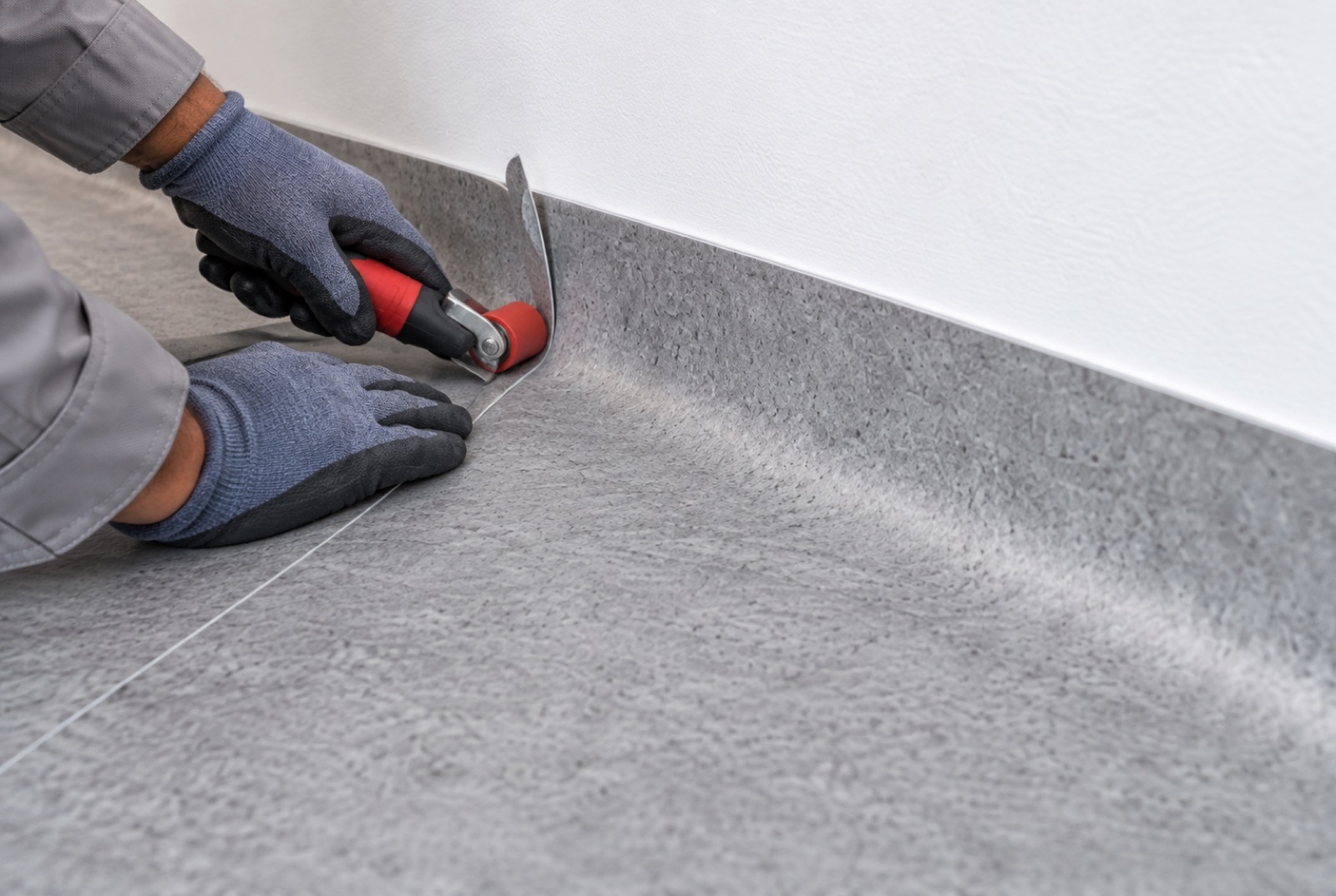
Vinyl flooring (PVC sheet, homogeneous vinyl) is a common choice in facilities with high hygiene requirements, but welded seams can become a weak point over time under heavy loads, moisture and repeated cleaning. Here we compare vinyl flooring with UQESH PF with TAP 750 – a seamless polyurethane alternative – based on real test data.
The PF System
| Base and wear layer | UQESH PF, a four-component waterborne, self-levelling polyurethane mortar |
| System thickness | 2 mm |
| Top coat | UFLex TAP 750, approx. 0.06–0.08 mm |
| Surface | Dense, easy to clean and seamless within continuous areas |
| Slip resistance | R9–R10 |
| Environment and installation | Waterborne system with very low VOC content, under 10 g/L, odourless installation and a high proportion of bio-based raw material from castor oil |
Comparison
The comparison focuses on point load, forklift traffic and heavy loads, floor details, chemicals, heat, wear, cleaning and hygiene.
| Assessment Point | Vinyl Flooring | UQESH PF with TAP 750 |
|---|---|---|
| Point load | A relatively soft material that can suffer permanent indentations from machine feet, rack legs and heavily loaded carts. | On a substrate that meets the requirements, UQESH PF can achieve a compressive strength above 40 MPa, a flexural strength above 15 MPa and Shore D above 80. |
| Forklift traffic and heavy loads | Recurring forklift traffic and heavy transport can cause indentations, wear and stress on the welded seams, especially with small or hard wheels and high wheel loads. Suitability depends on the sheet's quality and thickness, the adhesive system and the actual wheel load. | The UQESH PF system has a highly wear-resistant surface and is specifically engineered for heavy loads and frequent forklift traffic. |
| Seams, connections and areas around floor drains | Has welded seams. If seams or connections are damaged, water, cleaning agents and dirt can penetrate underneath the sheet. Areas around floor drains and penetrations are especially sensitive. | Applied as a continuous surface without welded sheet seams. The system can be connected to floor drains and finished with a rounded cove base and raised skirting. |
| Chemicals | Withstands normal cleaning, but resistance to strong cleaning agents, solvents and disinfectants varies between different sheets and adhesive systems. | PF with TAP 750 has documented resistance to several relevant cleaning and disinfection chemicals. |
| Heat | Capacity varies between different sheets and adhesive systems. Hot water, hot steam and recurring temperature changes can affect the material and stress seams and connections. | The PF system withstands temperatures from −15 to +65 °C and brief cleaning with hot steam. For higher temperatures or severe thermal shocks, UQESH can offer a special high-temperature system engineered for continuous temperature loads from −45 to +140 °C. |
| Damage and wear | Local damage can compromise the seal, and repair normally means welding in a new piece of sheet. | The hard surface provides good resistance to wear and rolling traffic. Local damage can be repaired with a compatible system. |
| Cleaning | An intact, correctly installed vinyl floor is easy to clean. Seams, repairs, upturns and connections can become sensitive detail points over time. | The seamless, dense surface reduces the number of detail points where dirt and moisture can collect. |
| Hygiene | Can provide a hygienic surface as long as the sheet, welded seams and connections remain intact, sealed and correctly cleaned. | The continuous surface without welded sheet seams provides good conditions for long-term hygiene. Rounded transitions and correctly executed connections ease cleaning and reduce the number of areas where liquid and dirt can collect. |
PF with TAP 750
Resistance to point load: The hard surface reduces the risk of permanent indentations from machinery, rack legs and recurring cart traffic compared with a softer, elastic flooring material.
Cleanable surface: The dense, easy-to-clean surface suits facilities where mechanical cleaning or spot disinfection is carried out.
Adaptable details: Cove bases, skirting, floor drains and penetrations can be built into a single continuous coating system.
A long-term material choice: PF with TAP 750 combines high wear resistance with a seamless surface. That reduces the number of vulnerable seams that can open up, collect dirt or require recurring repairs. The result is less maintenance, lower risk of downtime and a more reliable floor over time.
Test Data
The chemical resistance table below summarises a 48-hour drop test with TAP 750 under JIS A 5705 and a supplementary 168-hour SGS test of cleaning and disinfection agents for PF with TAP 750.
| Chemical | Concentration | Result | Comment |
|---|---|---|---|
| Sodium hypochlorite | 1 % | R | Relevant for chlorine-based disinfection |
| Detergent | – | R | General cleaning agent in the test guide |
| Ammonia | 25 % | R | Alkaline substance |
| Sodium hydroxide | 30 % | R | Strongly alkaline substance |
| Methanol | – | R | Solvent |
| Acetone | – | R | Solvent |
| Phenol | 6.7 % | NR | Should not be specified without separate assessment |
| Hydrochloric acid | 10 % | R | Acid |
| Sulphuric acid | 10 % | R | Acid |
| Phosphoric acid | 10 % | R | Acid |
| Acetic acid | 10 % | R | Organic acid |
| Formic acid | 40 % | R | Organic acid |
| Citric acid | 10 % | R | Organic acid |
| Nitric acid | 10 % | L | Limited resistance |
| Lactic acid | 25 % | L | Limited resistance |
| Quaternary ammonium salt | 10 % | R | SGS test, 168 hours |
| Peracetic-acid-based fungicide | 10 % | L | SGS test, 168 hours |
| Sodium hypochlorite | 12 % | L | SGS test, 168 hours |
| Hydrogen peroxide | 12 % | R | SGS test, 168 hours |
| Sodium hydroxide at room temperature | 30 % | R | SGS test, 168 hours |
| Sodium hydroxide at 85 °C | 30 % | R | SGS test, 168 hours |
R = resistant, L = limited resistance, NR = not resistant. Results apply to the stated concentrations and test conditions.
Conclusion
PF with TAP 750 is assessed as a more robust alternative to vinyl flooring. Compared with vinyl flooring, PF with TAP 750 offers lower risk of damage, less maintenance and better operational reliability under heavy and recurring loads, as well as in environments with prolonged moisture exposure and high hygiene requirements.
FAQ
Vinyl flooring (PVC sheet) is laid in sheets or tiles with welded seams, while UQESH PF with TAP 750 is applied as a continuous, seamless surface. That means fewer weak points where water, dirt and chemicals can get in, and a harder surface with documented higher compressive and flexural strength.
Yes, provided the vinyl flooring's seams and connections remain intact. UQESH PF with TAP 750 has no welded sheet seams at all, and can be installed with a rounded cove base and raised skirting, which reduces the number of places where liquid and dirt can collect over time.
Yes. Vinyl flooring's softer surface can suffer permanent indentations from machine feet, rack legs and heavy carts, especially with small or hard wheels. UQESH PF is specifically engineered for heavy loads and frequent forklift traffic, with a compressive strength above 40 MPa on a substrate that meets the requirements.
Resistance varies between different vinyl sheets and adhesive systems. PF with TAP 750 has documented resistance to a wide range of cleaning and disinfection chemicals, verified through a 48-hour drop test under JIS A 5705 and a supplementary 168-hour SGS test.
Explore deeper comparisons and test results, or find out more about UQESH PF.